qEEG Mapping
Advanced brainwave analysis for better insights.
Quantitative EEG and Brain Mapping for TBI
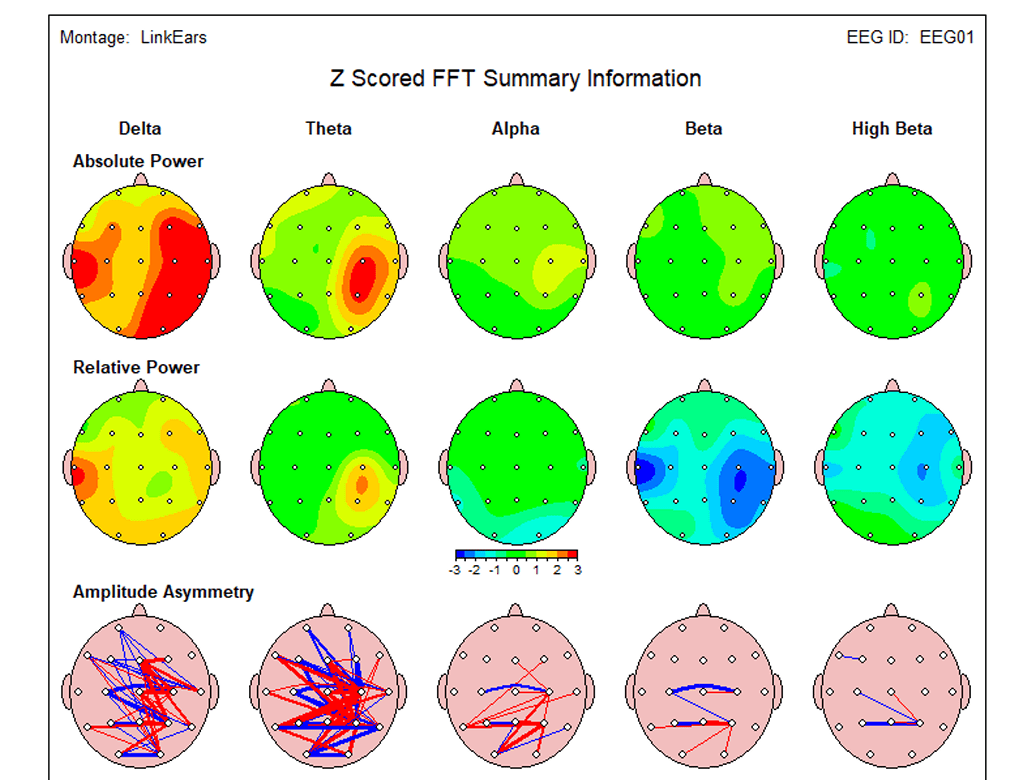
Quantitative Electroencephalography (qEEG) is an advanced neuroimaging tool that employs sophisticated software to meticulously analyze raw EEG data. Its purpose is to identify, quantify, and track the effects of traumatic brain injury (TBI) by measuring various electrical activity patterns, including wave power, frequency, and coherence. This analysis provides objective evidence of brain dysfunction, aiding in diagnosis, predicting prognosis, and monitoring recovery by detecting specific abnormalities. This quantitative insight is also vital for designing precise, targeted interventions like neurofeedback.
Mechanism: How qEEG Uncovers TBI Effects
qEEG transforms the general EEG recording into detailed, quantifiable data by comparing it against normative databases:
Detailed Brain Activity Analysis:
Specialized software processes routine EEG recordings to examine metrics—such as frequency bands and power distribution—that are often not discernible through a simple visual inspection of the raw data.
Identification of Electrical Abnormalities:
The analysis detects significant deviations from expected brain wave patterns strongly correlated with TBI. Common findings include:
Elevated Slow-Wave Activity: An increased proportion of delta and theta power when compared to healthy control subjects.
Reduced Fast-Wave Activity: A common finding is a decrease in the power of higher-frequency alpha and beta waves.
Diminished Coherence: The software often reveals impaired connectivity, particularly a reduction in synchronized electrical signaling between different brain regions, notably across the two hemispheres.
Longitudinal Change Tracking:
qEEG serves as a powerful biometric tool to monitor the evolution of functional brain changes across the acute, subacute, and chronic phases of post-TBI recovery.
Clinical Applications in TBI Care
The objective data provided by qEEG is critical across the spectrum of TBI management:
Diagnosis and Injury Classification:
qEEG delivers objective, measurable indicators of brain dysfunction, which are valuable in both identifying and classifying individuals, particularly those with mild traumatic brain injury (mTBI).
Prognostic Assessment:
The metrics can help clinicians predict the likelihood of a patient developing post-concussive syndrome and provide a more accurate forecast of long-term outcomes, especially in cases of severe TBI.
Informing Treatment Strategy:
By pinpointing specific areas of functional disruption, qEEG guides the creation of highly individualized, targeted interventions, such as neurofeedback training, designed to specifically address associated cognitive deficits.
Monitoring Rehabilitation Progress:
The technique offers a quantitative, evidence-based method for objectively tracking a patient's neurological progress and treatment efficacy over time.
Important Considerations and Caveats
While highly valuable, qEEG must be interpreted within a broader clinical context:
Lack of a Universal Signature:
There is currently no single, pathognomonic qEEG pattern universally unique to TBI, and specific abnormalities may naturally resolve or clear over time.
Requirement for Comparative Data:
The most clinically relevant results are achieved by comparing a patient's qEEG results either to a large, validated normative database or to the patient's own individual pre-injury baseline (if available).